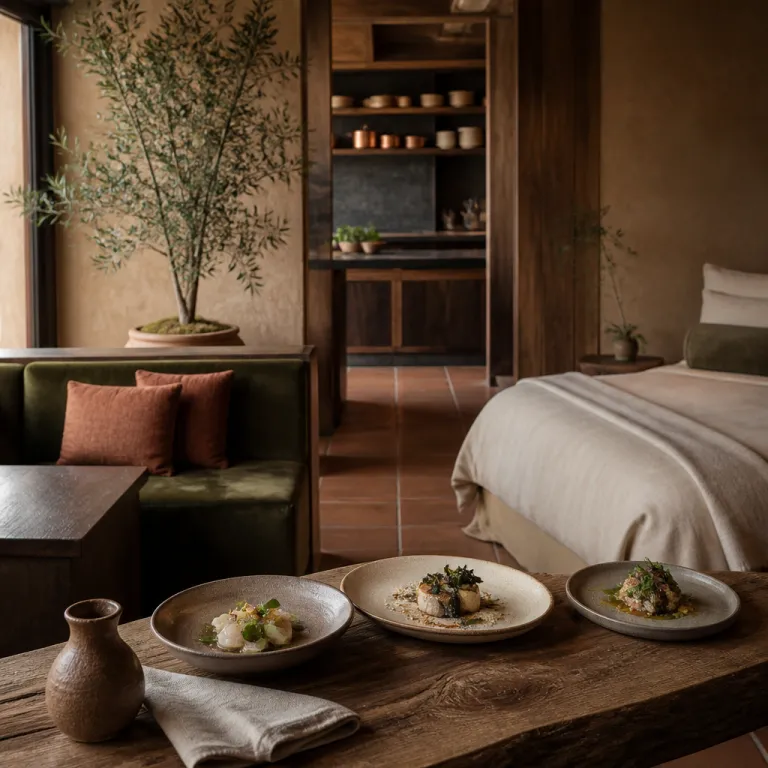
From room for the night to table for the evening
The most interesting luxury hotels now start with the plate, not the pillow. In this new era of chef-driven hotel restaurant culture and destination dining hospitality, the restaurant often defines the entire narrative of the stay. For solo travelers choosing where to book, the question quietly shifts from which hotel to which dining room will frame their most memorable meals.
Chef hotel partnerships have moved far beyond a logo on the menu or a passing executive appearance in the dining room. Many luxury hotels now invite a chef who has spent years building a strong culinary identity to shape everything from in-room dining to the lobby bar food and beverage program. These collaborations turn hotel dining into a cultural statement, where the restaurant becomes a destination for the city as much as for the guest upstairs.
For adults-only and love hotels, this shift is especially powerful because intimacy and privacy are already part of the architecture. When a chef-driven concept is layered onto that, the hotel restaurant can feel like a secret address, a place where dining experiences are tailored to couples or solo explorers who value discretion. The result is a new kind of hospitality in which hotel restaurants operate as urban salons, drawing locals, travelers and destination diners who may never see a guest room but still carry the brand story back into the city.
Chef partnerships that turn hotels into dining destinations
Across the United States and beyond, a handful of hotel restaurants show how far this model can go. At Salamander Washington DC, chef Kwame Onwuachi’s Afro-Caribbean restaurant Dōgon is a roughly 200-seat space whose astronomy-inspired design references Dogon cosmology and Benjamin Banneker; the room reads like a gallery where food, light and history share equal billing. Here, the executive chef partnership anchors the entire hospitality concept, illustrating how a serious, chef-led restaurant strategy can carry as much weight as the spa or the suites.
In Nashville, Jean-Georges Vongerichten’s Drusie & Darr at The Hermitage Hotel uses Southern American cuisine to trace the city’s food history through precise technique and quietly luxurious service. The menus lean into local culture with ingredients that feel rooted in Tennessee soil, yet the fine-dining polish would be at home in any Michelin-starred room. Guests who book a stay often plan their whole evening around the restaurant, while locals treat it as an acclaimed dining room that just happens to sit inside a grand hotel.
New York’s Hotel Chelsea offers a different lesson in longevity with El Quijote, where chef Jaime Young has kept the 1930s Spanish aesthetic largely intact while updating the culinary technique and service style. The restaurant shows how hotel dining rooms can outlive every renovation, becoming emotional landmarks that define a property more than any lobby refresh. For travelers, these examples underline a simple truth: when the chef partnership is serious, hotel dining stops being a fallback and becomes the reason to cross the lobby in the first place.
Love hotels, in room dining and the intimacy of the table
Long before mainstream luxury hotels embraced chef-driven concepts, Japanese love hotels were quietly experimenting with elaborate in-room dining as a design feature. Themed menus, playful presentation and discreet room service made food part of the fantasy, not just a tray at the door. That history matters now, because it shows how a hotel restaurant can extend into the private space of the room and still feel like fine dining rather than a compromise.
For a solo explorer or a couple booking a premium love hotel, the ability to order an omakase-style progression or a chef-curated late-night menu directly to the suite changes the rhythm of the stay. Instead of rushing downstairs to compete for tables at busy hotel restaurants, the guest can treat the room itself as a private dining room with its own culinary journey. When the executive chef and the food and beverage équipe design these menus with the same strong culinary intent as the main restaurant, room dining becomes another expression of chef-led hotel gastronomy and destination-focused hospitality.
In cities like Tokyo or São Paulo, where love hotels are woven into local culture, this approach turns hotel restaurants into quiet laboratories for new dining experiences. A chef who has spent years in Michelin-starred kitchens might test a more relaxed, sensual style of service here, using ingredients that travel well from kitchen to elevator to suite. For travelers using a luxury and premium booking website for love hotels, these details are no longer fringe perks; they are central criteria when deciding which hotel to book for a night that is meant to feel both intimate and gastronomically serious.
How destination restaurants reshape hotel economics and identity
From a business perspective, chef hotel partnerships are not just about better food. Industry research from firms such as JLL and CBRE indicates that hotels with high-performing food and beverage programs can see double-digit percentage increases in dining revenue, and that uplift often stabilizes occupancy by attracting guests who travel specifically for culinary experiences. In other words, a strong restaurant program can make a hotel less dependent on seasonal room rates and more resilient as a hospitality brand.
There is another, subtler advantage: destination diners who never check in often become the most vocal brand ambassadors. A local who spends evenings in an award-winning hotel restaurant, or who treats the bar as a regular meeting point, will talk about the property with the familiarity of a frequent guest. Over time, this blurs the line between hotel dining rooms and stand-alone restaurants, and the hotel restaurant becomes part of the city’s cultural map rather than a private amenity for travelers.
For adults-only and love hotels, where discretion is paramount, this dynamic needs careful calibration but can still be powerful. A rooftop grill like Michael Solomonov’s Laser Wolf at The Hoxton in Brooklyn shows how a multi-venue takeover of a hotel’s food program can attract a crowd without overwhelming the guest experience. When a vice president of food and beverage or an executive chef team balances public restaurant energy with private in-room dining intimacy, the result is chef-driven hotel hospitality that feels both open to the city and protective of the guest.
How to choose a chef driven hotel for your next stay
For travelers scrolling through a luxury and premium booking website for love hotels, the smartest filter is often the restaurant, not the room category. Start by reading the story of the chef; if they have spent years building a reputation in Michelin-starred kitchens or respected local restaurants, that history usually translates into more thoughtful hotel dining. Look for signs of a strong culinary partnership, such as chef residencies, seasonal menus built around local ingredients and clearly defined dining experiences beyond breakfast.
Next, study how the hotel restaurant connects to local culture and to the architecture of the property. A concept like Dōgon in Washington DC or Drusie & Darr in Nashville works because the food, design and service all speak to the city outside the windows, not just to a generic idea of luxury hotels. On a site like lovehotelstay.com, where we curate luxury adults-only hotel booking options to elevate your travel with exclusive resorts and curated experiences, pay attention to whether the hotel restaurants feel like genuine extensions of the neighborhood or interchangeable global brands.
Finally, consider how the property handles privacy, especially if you are booking a love hotel stay where discretion matters as much as hospitality. Check whether room dining menus mirror the main restaurant, whether the executive chef has created omakase or tasting formats that work in-suite and whether the service team is trained for low-contact delivery. When those elements align, you are looking at the purest form of chef-driven hotel dining, where the hotel, the restaurant and the guest all meet at the same carefully set table.
Frequently asked questions
What are chef hotel partnerships and why do they matter when booking ?
Chef hotel partnerships are collaborations where chefs manage hotel restaurants, shaping everything from menus to service standards. They matter because they turn hotel dining into a core part of the stay rather than a backup plan. For travelers choosing between luxury hotels, a serious partnership with an executive chef often signals better food, more coherent hospitality and more memorable meals.
How can I evaluate a hotel restaurant before I book a room ?
Start by researching the chef’s background, looking for experience in respected restaurants or Michelin-starred kitchens and evidence that they have spent years refining their technique. Read recent menus to see how they use ingredients and whether the culinary journey reflects local culture rather than a generic hotel template. Finally, check independent reviews that focus on dining experiences, not just the rooms, to understand how the restaurant performs for both guests and locals.
Are hotel restaurants really good enough for destination dining ?
Many contemporary hotel restaurants are designed as destination dining rooms first, with the hotel built around them. Concepts like Dōgon in Washington DC, Drusie & Darr in Nashville, Laser Wolf in Brooklyn and El Quijote in New York show how hotel dining rooms can anchor a city’s food scene. For travelers, this means that booking the right hotel can secure access to an acclaimed restaurant without leaving the building.
What should I look for in in room dining at a love hotel ?
In a love hotel context, in-room dining should feel like an extension of the main restaurant, not an afterthought. Look for chef-driven menus that include omakase-style progressions, tasting sets for two and dishes designed to travel well from kitchen to suite. Discreet, efficient service and clear attention to food quality are strong signs that the hotel takes both intimacy and gastronomy seriously.
Why do hotels invest so heavily in food and beverage programs now ?
Hotels invest in ambitious food and beverage programs because exceptional dining increases guest satisfaction, attracts local diners and boosts overall revenue. Research from hospitality analysts suggests that properties with strong chef partnerships can see significant growth in dining income, which helps stabilize the business beyond room rates. For travelers, this investment translates into richer culinary experiences and more reasons to choose one property over another.
Sources
Resy editorial coverage of hotel restaurants; Business Times and similar outlets on Michelin-starred chefs moving into luxury hotels; Auberge Resorts communications on chef partnerships and culinary programs; hospitality industry reports from firms such as JLL and CBRE on food and beverage performance in hotels, which frequently cite double-digit percentage revenue growth for hotels with strong restaurant concepts.