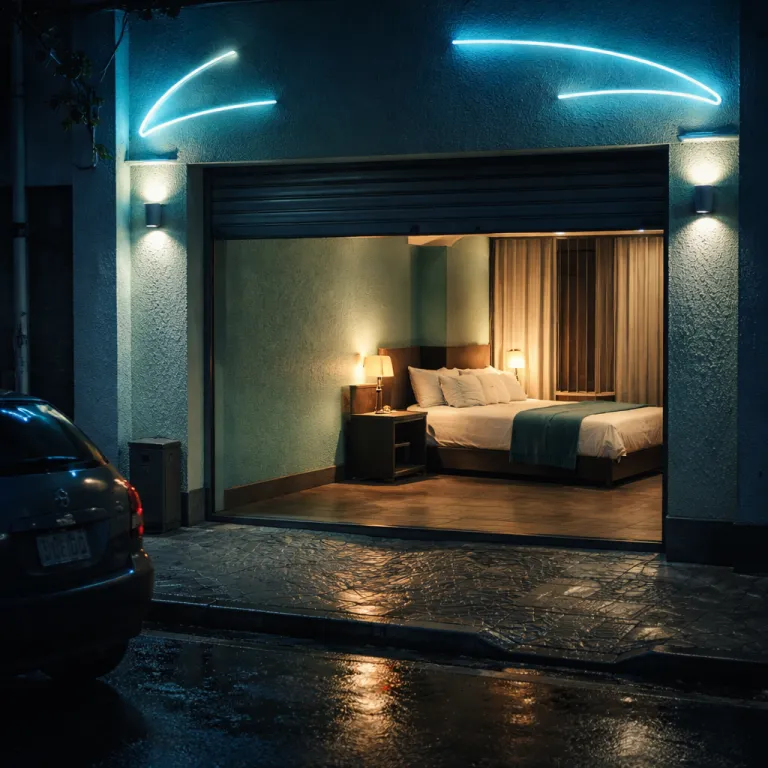
Brazil love motel design culture as a mainstream urban phenomenon
Brazilian love motel design culture sits at the crossroads of architecture, intimacy, and everyday urban life. In a country where large families often share compact apartments, the typical love motel in Brazil is less fringe fantasy and more practical extension of the home. For couples planning a short stay with privacy, these properties function as discreet, design-driven accommodations rather than marginal curiosities.
Anthropologist Jérôme Souty, who has written about Brazilian erotic spaces and popular culture in academic journals and essays, describes the love motel as a cultural institution, not a subculture. His research traces how Brazilian love spaces emerged when young adults still living with parents needed somewhere beyond the family home to express love and desire. That context explains why love motels and their rented rooms are scattered across cities from São Paulo to small rainforest towns, integrated into the same urban fabric as any conventional hotel.
Architect Paulo Pontes, cited in Brazilian design magazines for his work on hospitality projects, treats each love motel as a complete micro-universe. He collaborates with local interiors specialists to balance privacy engineering, efficient circulation, and theatrical suites that still clean easily between guests. For travelers, this means that a Brazilian love motel can offer surprisingly high-quality rooms, often with Jacuzzis, mirrored ceilings, and soundproofing that rival far more expensive accommodations.
Industry estimates from Brazilian motel associations, such as the Associação Brasileira de Motéis (ABMotéis), suggest there are roughly 5,000 love motels across the country, from highway properties to dense urban towers. Many of these motels offer both short-stay options and overnight packages, making them flexible for different types of trips. When you browse a premium booking website or a curated romantic-stay guide, you can see how Brazilian love motel design culture has matured into a legitimate hospitality segment with clear standards, transparent pricing, and recognizable quality tiers.
The visual language of brazilian love motel interiors
The first thing you notice in many Brazilian love motel interiors is the color. Sherbet pinks, deep red tones, and cobalt blues wash across tiles, vinyl, and lacquered headboards, creating a cinematic glow that feels closer to a film set than a standard hotel room. In São Paulo, where land is expensive and rooms are compact, designers use mirrors and dancing poles to stretch space visually and turn a small suite into a theatrical stage.
Across Brazil, love motel suites often feature mirrored ceilings, neon strips, and carefully placed sex chairs that are more about playful ergonomics than shock value. These interiors are part of a broader global conversation about intimate design, sitting comfortably beside the rotating beds and mirrored ceilings of Tokyo’s most inventive properties, which you can explore in depth through this guide to legitimate design in Japanese love hotels. For couples used to minimalist accommodations, the exuberance of Brazilian love motel design culture can feel surprisingly refreshing and oddly nostalgic.
Photographic projects have helped cement this aesthetic language. Dutch art director Vera van de Sandt and photographer Jur Oster, often credited together as director Vera and photographer Jur, have spent significant time documenting love motels across Brazil, from São Paulo to remote roadside outposts. Their photograph series lingers on tiled rooms, red lighting, and the quiet geometry of garages and staircases, revealing how each motel suite is both a stage for sex and a carefully composed interior.
In their work, you see how a simple motel room becomes a study in color blocking and material contrast. A white dog statue might sit beside a Jacuzzi, while chrome dancing poles reflect neon bands across the floor. For design-conscious travelers, these interiors offer a rare chance to sleep inside a living archive of Brazilian love culture, where every suite tells a slightly different story about taste, fantasy, and the passage of time.
Privacy architecture and the choreography of discretion
Behind the theatrical interiors, Brazil love motel design culture is defined by its architecture of discretion. Many motels feature private garages at ground level, allowing guests to drive a car or compact van directly into an enclosed bay before climbing a hidden staircase to their rooms. This choreography of arrival means couples can move from street to suite without crossing a public lobby, a key distinction from a conventional hotel.
Once inside, the layout of the suite continues this focus on privacy. Wall hatches allow staff to deliver food, drinks, or extra towels without visual contact, so a short stay can remain uninterrupted from check-in to departure. Soundproofing, opaque glass, and carefully angled corridors ensure that even when motels are stacked densely in São Paulo or along busy highways, the experience inside feels sealed off from the city and its constant movement.
This privacy engineering responds directly to Brazilian social realities. In many cities, young adults live with parents well beyond high school and into early careers, making private space for sex and intimacy rare at home. Love motels step into that gap, offering rented rooms that feel both anonymous and safe, with interiors that are playful enough to feel like a treat but robust enough to handle constant turnover.
For travelers booking through a premium platform, understanding this architecture helps you choose the right accommodations. If you value discretion, look for motels that highlight private garages, direct-access staircases, and in-room service hatches in their suite descriptions. These details are as important as the Jacuzzi or the mirrored ceilings, because they shape how relaxed and unobserved your time in the love motel will feel from arrival to checkout.
From São Paulo towers to rainforest retreats: regional design variations
Brazil love motel design culture shifts subtly as you move across the country. In São Paulo, where land is scarce and demand is constant, many love motels rise as vertical towers with stacked suites, compact garages, and efficient circulation cores. Interiors here often lean toward glossy tiles, LED lighting, and modular sex chairs that can be cleaned quickly between short-stay bookings.
Travel north or toward the rainforest, and the architecture relaxes. Motels in smaller towns may spread across low-rise plots, with suites arranged around internal courtyards, small gardens, or even views toward patches of preserved forest. These properties sometimes offer larger suites suitable for couples traveling with friends or even large families who book multiple rooms, though the core focus remains on privacy for each individual suite.
Design details also respond to climate and local culture. In humid regions, you will see more ceramic tiles, ceiling fans, and open-air garages that still protect a car or van from view while allowing air to circulate. In cooler southern cities, some motels experiment with warmer materials, dimmer red lighting, and thicker textiles, creating interiors that feel closer to a cinematic chalet than a roadside stop.
For couples planning a trip, this regional diversity is an opportunity. A night in a São Paulo tower love motel might be followed by a rainforest property where your suite opens onto a tiny private garden, each stay revealing a different facet of Brazilian love motel design culture. When you compare options on a curated platform, pay attention to how each motel describes its setting, its rooms, and its architectural concept, because those clues will shape the atmosphere of your stay as much as any amenity list.
Curating a premium stay: what discerning travelers should look for
For couples using a luxury and premium booking website, the key is reading Brazil love motel design culture through the lens of comfort and quality. Start with the basics: suite size in square metres, bed dimensions, and whether the motel offers clear categories from standard rooms to premium suite options. Look for explicit mentions of mirrored ceilings, Jacuzzis, and dancing poles only if they align with the mood you want for your time together.
Next, examine the visual language in the photographs. Properties that invest in professional photography often highlight how interiors balance theatrical elements like sex chairs with practical comforts such as high-quality linens, strong showers, and intuitive lighting controls. When a listing references the work of creatives like Vera van de Sandt and Jur Oster, or nods to the broader Brazilian love motel aesthetic, it usually signals a conscious design approach rather than random decoration.
Privacy features deserve the same scrutiny. Check whether the motel offers private garages for each suite, discreet check-in procedures, and in-room dining that arrives through hatches instead of door knocks, especially if you are planning a short stay between flights or meetings. If you are curious about how these standards compare internationally, you can explore premium booking experiences in other countries through this guide to romantic getaways, then return to Brazil with a sharper sense of what feels exceptional versus merely adequate.
Finally, consider how the property positions itself culturally. Some love motels lean into playful Brazilian themes with bold red palettes and nostalgic references to high school fantasies, while others adopt a calmer, spa-like tone that still respects the core privacy needs of guests. A thoughtful booking platform will help you filter by mood, amenities, and design style, so you can choose a love motel that feels like an intentional part of your journey rather than a last-minute compromise.
The van de Sandt and Oster archive: preserving a fading aesthetic
One of the most compelling windows into Brazil love motel design culture comes from the long-running collaboration between art director Vera van de Sandt and photographer Jur Oster. Traveling across Brazil over many years, Vera and Jur have turned their attention to love motels that might otherwise vanish without a trace. Their work captures not just the rooms, but the entire ecosystem of garages, staircases, signage, and service corridors that make these properties function.
In their photographs, you see the full spectrum of interiors, from immaculate suites with polished sex chairs and glowing Jacuzzis to slightly worn rooms where the tiles bear the patina of countless visits. Director Vera often frames the architecture as a kind of stage, while photographer Jur lingers on details like a lone dog figurine, a faded red mural, or the way fluorescent light spills across a tiled floor. Together, they show how each motel is anchored in its place and its time, even as guests pass through anonymously.
Their archive also documents a quiet shift. As newer motels adopt more neutral palettes and international hotel standards, some of the most exuberant Brazilian love motel interiors are disappearing, replaced by safer, more generic design. For travelers, this means that booking a stay in an older, well-maintained love motel can feel like stepping into a living museum of color, pattern, and privacy engineering, especially in cities like São Paulo where redevelopment pressure is intense.
For a premium booking platform, referencing the van de Sandt and Oster perspective is more than a design flourish. It signals respect for the cultural history behind each suite, from the earliest experiments in neon and mirrors to the contemporary emphasis on comfort and discretion. When you choose a property that understands this lineage, your night in a Brazilian love motel becomes not just a private escape, but a small, meaningful encounter with a uniquely Brazilian design culture.
FAQ
Are love motels common and socially accepted in Brazil ?
Love motels are widespread across Brazil, with thousands of establishments operating in cities and along highways. They are considered mainstream, partly because many adults live with parents until marriage and need private spaces outside the family home. For travelers, this means that booking a love motel is a normal, socially understood choice rather than a fringe activity.
What is the main difference between a love motel and a conventional hotel ?
A love motel is designed primarily for privacy and short-stay visits, often offering private garages, discreet entrances, and in-room service hatches. Conventional hotels usually have public lobbies, visible corridors, and a stronger focus on overnight or multi-night stays. In Brazil, many love motels now also offer overnight accommodations with amenities that match or exceed mid-range hotels.
Do Brazilian love motels offer themed rooms and special interiors ?
Many Brazilian love motels feature themed rooms with distinctive interiors, including colored lighting, mirrored ceilings, Jacuzzis, and occasionally dancing poles or sex chairs. Themes can range from subtle mood lighting to more theatrical concepts, depending on the property. When booking, you can usually choose between simpler rooms and more elaborate suites according to your preferences.
Is privacy really guaranteed in Brazilian love motels ?
Privacy is a core design principle in Brazilian love motels, which often use private garages, direct-access staircases, and soundproofing to protect guests. Staff are trained to minimize contact, and many services are delivered through wall hatches to avoid face-to-face interaction. While standards vary, reputable motels place discretion at the centre of their architecture and operations.
How should travelers choose a high quality love motel for a romantic stay ?
Travelers should look for clear information on suite size, amenities, and privacy features, as well as recent photographs that show the condition of interiors. Reviews from other guests and curated recommendations from specialist platforms can help identify properties with consistent cleanliness, good service, and thoughtful design. Booking in advance, especially during weekends or holidays, ensures access to the best suites and avoids last-minute compromises.