Solo traveler guide to Japanese love hotels: anonymous check‑in, rest vs stay rates and safety tips
Love hotels for solo travelers: design‑savvy check‑in tips
Checking into a love hotel as a solo traveler can feel intimidating at first, yet in Japan it is a quietly normal part of urban travel culture. For independent travelers who value privacy, design and efficiency, a focused approach to solo love hotel stays turns that first visit into a smooth, almost cinematic experience. When you understand how each property, each room category and each check‑in system works, you can book with confidence and enjoy a stay that feels both safe and indulgent.
Across Japan there are an estimated 30,000 love hotels, according to figures cited in domestic hospitality surveys and tourism commentary that draw on data from the Japan Productivity Center’s leisure industry reports. While exact numbers fluctuate, the consensus is that solo travelers can find everything from discreet concrete towers in Shinjuku or Shibuya to neon‑wrapped hotels near Tokyo ring roads. These properties offer short stay “rest” options and overnight “stay” rates, so your booking strategy will depend on whether you are traveling solo for one night or just a few hours between trains. Smart planning starts before you even compare hotel options: check whether solo guests are accepted, how the property handles late arrivals and whether there are clear policies for anonymous check‑in.
Many properties that market themselves as love hotels now quietly welcome solo travelers, including solo female guests who prioritise safety and anonymity. On premium booking platforms, filters let you find hotels in Japan that clearly state solo‑traveler‑friendly policies, no ID photocopying and clear room service rules about the do not disturb sign. When you book a hotel room through a curated site like lovehotelstay.com, you will see whether the property offers free amenities, whether the front desk is staffed 24 hours and whether the rooms include extras such as karaoke systems or oversized bathtubs.
Solo traveler snapshot: One frequent business traveler describes using a Shinjuku love hotel as a “quiet office with a bathtub” between meetings and a late shinkansen, while a solo female guest in Ikebukuro recalls choosing a property purely because reviews praised the lighting around the entrance and the clarity of the anonymous check‑in system.
How anonymous check‑in systems work for solo travelers
The most distinctive part of any solo traveler guide to Japanese love hotels is the lobby, because it rarely looks like a conventional hotel front desk. In Tokyo and other dense Japanese cities, many properties use illuminated panels or touchscreen menus where you check available rooms, compare prices and select your preferred design without speaking to anyone. For solo travelers who value privacy, this system means you can choose your room, pay and head straight upstairs with minimal social friction.
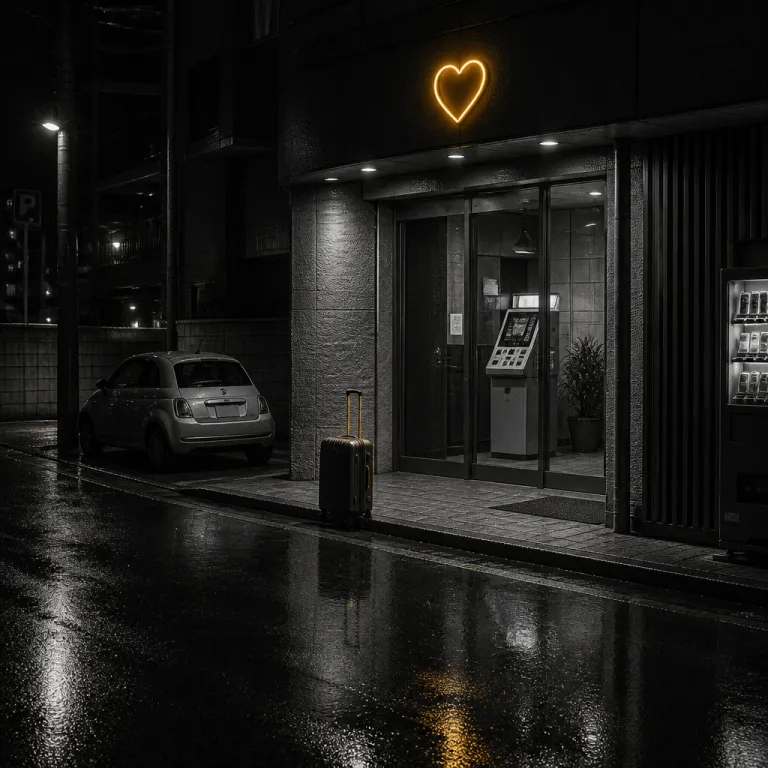
At street level, you usually see a discreet entrance, a rate board and sometimes a small sign explaining rest and stay pricing for the rooms. Once inside, the check‑in ritual begins at a digital panel that shows photos of each room, the current rate for a short rest and the overnight stay price, which is a core detail in any serious travel tips guide. Some panels still use older buttons and backlit photos, while newer hotels in Tokyo deploy sleek touchscreens that feel closer to airport kiosks than to anything linked with stereotypical Japanese love culture.
Payment is either at a machine beside the panel or via a small window where staff remain unseen, which reinforces the sense of safety for solo female guests and other independent travelers. A typical flow at a modern property might look like this: select an available room on the screen, confirm whether you want a rest or stay, take the printed ticket, pay at the adjacent machine and collect your key card from a small hatch. Industry guidance for guests often repeats three essential points for anonymous check‑in: “Check if the hotel allows solo guests. Bring cash; some hotels are cash‑only. Use translation apps for digital check‑in screens.” On luxury‑focused booking platforms, you will also see whether the hotel offers card payment, late‑night room service and clear do not disturb sign protocols, much like the linen and privacy rituals explored in this analysis of elevated laundry standards.
Rest versus stay pricing and how to read rate boards
Every credible solo traveler overview of Japanese love hotels must explain the difference between “rest” and “stay” pricing, because it shapes how you plan your travel budget. A rest is a short stay, usually one to three hours, and it is ideal for travelers who need a private room between meetings, late trains or red‑eye flights. A stay is the overnight rate, often starting after 22.00, and for a solo traveler it can be one of the best‑value ways to secure a quiet hotel room in central Tokyo or other dense districts of Japan.
Outside many love hotels you will see a vertical signboard listing prices for rest, stay and sometimes “free time”, which is a longer daytime block that solo travelers can use as a remote office. When you check these boards, pay attention to small print about weekend surcharges, maximum durations and whether the property offers free parking or late checkout, because these details will affect the total cost of your stay. Inside, the digital panels repeat the same information room by room, so you can compare basic rooms against themed suites before you commit to an option that matches your budget.
For design‑curious travelers, the rate difference between a standard room and a premium suite often buys you a larger bathtub, better soundproofing and more advanced entertainment systems. On some luxury‑focused sites, editors compare these features with the way high‑end properties use linen and laundry to elevate intimacy, as seen in this report on five star laundry standards. When you combine that level of detail with clear travel tips about safety, payment and check‑out timing, you can book your stay in love hotels with the same confidence you bring to any other hotels in Japan.
Choosing the right room: from compact pods to themed suites
Room selection is where a solo traveler’s strategy becomes personal, because the range of rooms is wider than in most conventional hotels. At the lower end, you will find compact but clean rooms with a standard double bed, a small desk and a bathroom that still feels more generous than many business hotels in Tokyo. For solo travelers who mainly need a safe, quiet place to sleep, these rooms offer some of the best price‑to‑comfort ratios in dense districts like Shinjuku or Shibuya.
Move up one or two price tiers and the hotel room experience changes quickly, with larger bathtubs, better lighting and more considered acoustics that make traveling solo feel indulgent rather than lonely. Many love hotels offer themed rooms with subtle design cues rather than cartoonish props, so you might find a mid‑century‑inspired space with a low platform bed, mirrored ceiling and integrated sound system that feels more like a private club than a gimmick. In Japan, where local culture values both privacy and hospitality, this level of in‑room engineering is taken seriously, and it shows in the way hotels offer multiple lighting scenes, ventilation modes and entertainment options.
For a solo female traveler, safety and control are central, so look for rooms where the door locks automatically, the peephole is covered and the do not disturb sign is clear and respected. Many properties now provide in‑room tablets for room service, lighting and check‑out, which means you can manage your entire stay without returning to the front desk. If you are planning a longer travel loop across Japan, consider alternating nights in love hotels with more conventional properties, using curated guides on lovehotelstay.com and even broader luxury features such as this deep dive into a private island spa resort to benchmark what “best in class” intimacy and design can look like.
Etiquette, safety and cultural context for traveling solo
Understanding etiquette is as important as understanding pricing in any resource about Japanese love hotels, especially if you are new to the culture. In Japan, these properties are primarily designed for couples seeking privacy, yet solo travelers are increasingly common, including business guests who value the anonymity and generous bathtubs after late meetings. Staff are trained to be discreet, so you will rarely feel judged at the front desk, but you should still move quietly in corridors and keep noise inside your room to a minimum.
From a safety perspective, many solo travelers report feeling more secure in love hotels than in some budget properties, because access is tightly controlled and corridors are monitored by cameras. Doors usually lock automatically, windows are often sealed and the do not disturb sign is respected rigorously, which is reassuring for any solo female guest arriving late at night in Shinjuku, Shibuya or other nightlife districts. When you check hotel reviews on specialist booking platforms, pay attention to comments about lighting around entrances, elevator access control and how quickly staff respond if a guest accidentally presses the wrong room service button.
Culturally, it helps to remember that Japanese love hotels emerged to solve a privacy problem in dense cities, not to create a fringe subculture. That is why many hotels in Japan now quietly welcome solo travelers, and why guidance from local experts stresses that “Are solo travelers allowed in love hotels? Yes, many love hotels accept solo guests.” If you respect the space, pay attention to signage and do not leave valuables scattered around when you step out briefly, your stay will feel as straightforward as any night in a conventional hotel, only with better soundproofing and more imaginative lighting.
Practical love hotel solo traveler guide check in tips for japan and beyond
Once you understand the basics, the final layer of any solo travel plan involving love hotels is practical logistics, especially if your itinerary moves across multiple Japanese cities. In Tokyo, where land values are high, many properties cluster near major stations, so solo travelers can find options within a few hundred metres of Shinjuku, Shibuya, Ikebukuro or Ueno. When you travel between cities, it can be efficient to book a conventional hotel near one station and then use a love hotel for a late rest before an overnight bus or early shinkansen.
Before you compare hotel options, check whether the property lists explicit solo traveler policies on its website or on curated platforms like lovehotelstay.com, because not every love hotel accepts solo guests every night. Some hotels offer free amenities such as soft drinks, toiletries and costume rentals, while others focus on high‑quality bedding and advanced entertainment systems, so read the room descriptions carefully. If you are traveling solo and plan to arrive after midnight, send a brief message through the booking system or call the front desk to confirm that overnight stay rates still apply and that check‑out times match your onward travel plans.
For many independent travelers, the appeal of love hotels lies in the combination of privacy, design and frictionless service, from silent elevators to efficient room service that arrives via hidden hatches. When you align those strengths with your own travel checklist — safety, location, price and cultural interest — love hotels become one of the best tools in your Japan travel toolkit. Whether you are a seasoned solo traveler or planning your first trip, treating the love hotel as a legitimate hotel category rather than a curiosity will help you find stays that feel both sophisticated and surprisingly restorative.
Quick solo traveler checklist for love hotels
- Confirm solo‑guest acceptance and rest/stay times before arrival.
- Screenshot the rate board or panel in case you need to double‑check prices.
- Carry enough cash for a full stay; some properties in Shinjuku and Ikebukuro remain cash‑only.
- Keep a translation app ready for digital panels and in‑room tablets.
- Once inside, lock the door, use the internal chain and hang the do not disturb sign.
Key figures and trends in solo stays at love hotels
- Japan hosts around 30,000 love hotels nationwide, according to Japan Wise Life and similar domestic sources that reference leisure industry statistics from organisations such as the Japan Productivity Center, which means solo travelers in major cities like Tokyo can usually find multiple properties within a short walk of major stations.
- Industry observers note a steady increase in acceptance of solo travelers at love hotels, reflecting broader shifts in Japanese culture toward independent lifestyles and solo leisure activities such as solo karaoke and solo dining.
- Check‑in patterns show that overnight stay periods typically begin around 22.00, while short rest periods of one to three hours dominate early evening and daytime usage, giving flexible options to travelers with irregular schedules.
- Many new or renovated properties now integrate advanced self check‑in technologies, including digital room selection panels and automated payment systems, which reduce staffing costs while enhancing privacy for solo guests.
FAQ about checking into a love hotel solo
Are solo travelers allowed in love hotels ?
Yes, many properties now welcome solo travelers, including solo female guests, especially in large cities across Japan. The official guidance from local experts is clear; “Are solo travelers allowed in love hotels? Yes, many love hotels accept solo guests.” When in doubt, check hotel policies on a trusted booking platform or call the front desk before you book.
What amenities do love hotels offer that benefit solo guests ?
Most love hotels offer spacious bathtubs, strong soundproofing and advanced entertainment systems, which can make traveling solo feel more like a private retreat than a compromise. Many properties offer room service via discreet hatches, in‑room vending machines and free amenities such as toiletries or soft drinks. As one expert summary notes, “What amenities do love hotels offer? Themed rooms, large bathtubs, karaoke, and more.”
Is check in anonymous at love hotels ?
In many Japanese love hotels, check‑in is designed to be anonymous, with digital panels for room selection and payment through machines or small windows where staff remain unseen. This system allows solo travelers to choose, pay and reach their room with minimal interaction, which some guests find safer and more comfortable. The standard industry answer confirms that “Is check‑in anonymous at love hotels? Yes, most offer anonymous self‑check‑in.”
How should a solo traveler choose between rest and stay rates ?
If you only need a few hours to shower, sleep or work between trains, a rest rate of one to three hours is usually the most economical choice. When you need a full night of sleep, especially after 22.00, the overnight stay rate will be better value and avoids the stress of watching the clock. Always read the rate board carefully, because some hotels in Tokyo and other cities adjust both rest and stay prices on weekends and holidays.
What are the main safety tips for solo guests in love hotels ?
Choose hotels with clear solo traveler policies, good lighting around entrances and secure elevator access, especially in dense nightlife districts like Shinjuku or Shibuya. Once in your room, use the internal lock, keep valuables in your bag and use the do not disturb sign when you want privacy, just as you would in any other hotel. If anything feels off, call the front desk immediately; staff are trained to prioritise guest safety and discretion.
Quick solo check‑in checklist
Before you arrive, confirm that the hotel accepts solo guests and note the start time for overnight stay rates. At the entrance, read the rate board for rest, stay and free‑time prices, then choose a room on the lobby panel that matches your budget. Have cash ready in case the property is cash‑only, and keep a translation app open for on‑screen instructions. Once in your room, lock the door, place valuables in your bag and hang the do not disturb sign if you want complete privacy.